Taj Mahal
Agra, Uttar Pradesh
|
|
Taj MahalAgra, Uttar Pradesh |
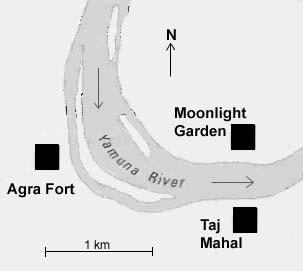
Built by Shah Jahan as a mausoleum for his principal wife Mumtaz Mahal, the Taj Mahal sits on the south bank of the Yamuna river, approximately 2km downstream from the Red Fort at Agra (map). Directly across the river from the Taj, Shah Jahan built a Mahtab Bagh ( "Moonlight Garden", now largely overgrown), giving it exactly the same dimensions as the Taj itself. This photo shows the Taj Mahal as viewed from across the river, just downstream from the Moonlight Garden, late in the afternoon, with the setting sun on its west face and its north face in shadow. The Taj is flanked by a pair of large sandstone buildings. The one on the west (photo right) was a mosque; its twin (jawab, "duplicate") on the east side was added for reasons of symmetry. The jawab's practical function (if any) is unknown.
Buried in the Taj Mahal are Shah Jahan and his beloved Mumtaz, who predeceased him by 35 years. Their actual burials lie underneath the main floor. They are marked on the main floor by cenotaphs, as is usual in Islamic funerary monuments.

|

|